Barriers and enablers to physical activity in type 1 diabetes: a mixed-methods study of adults and parent-reported child perspectives in the UK
This study explored what helps and hinders physical activity in people with type 1 diabetes across different ages. By comparing adults with parent-reported experiences of children, it examined not only individual challenges such as fear of hypoglycaemia, but also the wider influence of stigma, support, and the environments where physical activity takes place.
Why this study was done
People with type 1 diabetes are often less active than their peers, despite the clear health benefits of physical activity. Existing research has usually focused on adults or children separately and has given limited attention to wider social and environmental influences such as coaches, schools, stigma, and healthcare support.
This study aimed to provide a UK-wide comparison across age groups and to identify intervention targets using behavioural and socioecological frameworks.
How the study was carried out
The study used a mixed-methods cross-sectional survey distributed in the UK through Breakthrough T1D networks between December 2022 and January 2023. Responses from 311 participants were analysed, including 182 adults with type 1 diabetes and 129 parent-proxy responses for children with type 1 diabetes.
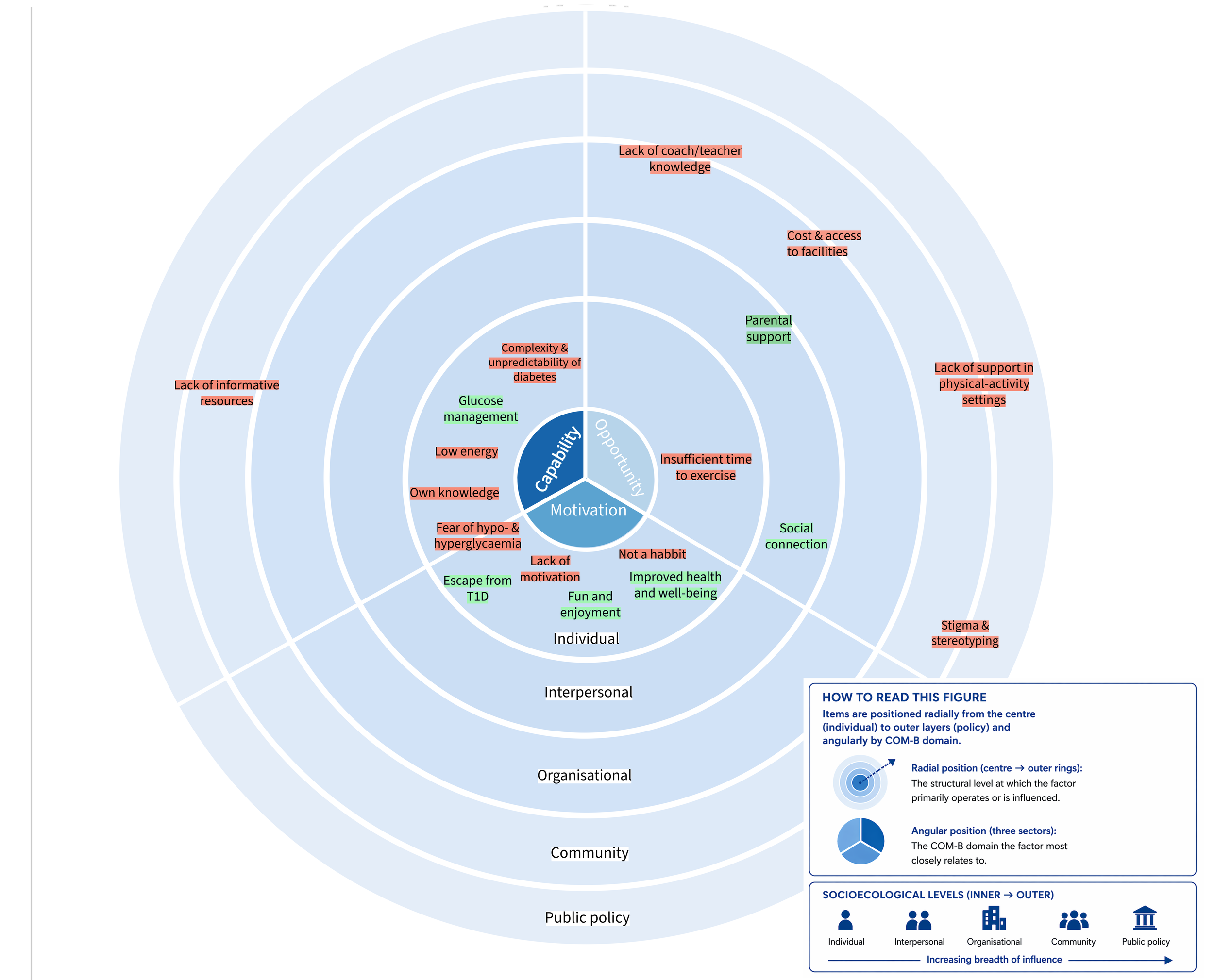
Quantitative data were analysed using descriptive statistics and group comparisons, while free-text responses were analysed thematically. Findings were then mapped to the COM-B model and the socioecological framework to identify barriers, enablers, and possible intervention targets.
What we found
The study found that barriers to physical activity operate at multiple levels. The most commonly reported barriers overall were fear of hypo- or hyperglycaemia, the complexity of diabetes management, lack of time, and low motivation. Adults were more likely than parent-reported child responses to report fear of hypo- or hyperglycaemia and lack of motivation, while children were more likely to face external barriers such as poor awareness among coaches and organisers.
Stigma emerged as a major and under-recognised issue. Nearly three-quarters of participants reported experiencing ignorance about type 1 diabetes, around half had heard comments suggesting people with type 1 diabetes could not be physically active, and 58% reported that coaches, PE teachers, or gym instructors had expected less of them because of diabetes.
The study also found important age-related differences in support. Only 24% of adults reported regular or frequent support from their healthcare team about physical activity, compared with 57% of parent-reported responses for children. Children were more often motivated by fun and social connection, while adults were more likely to be motivated by health, glucose management, mental wellbeing, and body image.
Why it matters
These findings suggest that improving physical activity in type 1 diabetes is not only about motivating individuals. It also requires action on stigma, better education for coaches and teachers, more accessible resources, and stronger support from healthcare professionals, especially in adult services.
For the wider ISPA-T1D programme, the study highlights the need for multi-level, co-designed interventions that address both self-management challenges and the wider social and structural barriers that shape participation in physical activity.