Effectiveness of Educational and Psychoeducational Self-Management Interventions in Children and Adolescents With Type 1 Diabetes: A Systematic Review and Meta-Analysis
Self-management education is an important part of care for children and adolescents with type 1 diabetes, but it is not always clear which approaches make the biggest difference. This review brought together evidence from randomised trials to examine whether educational and psychoeducational self-management interventions improve outcomes such as HbA1c, quality of life, self-efficacy, knowledge, and self-management behaviours.
Why this study was done
Young people with type 1 diabetes are expected to manage many complex tasks, including insulin dosing, glucose monitoring, diet, and physical activity. Although self-management education is widely recommended, previous reviews had found mixed evidence and did not fully reflect more recent studies or the range of interventions now being used.
This review was carried out to provide an updated picture of the evidence and to help inform the development of future support, including approaches that better address physical activity as part of diabetes self-management.
How the study was carried out
We conducted a systematic review and meta-analysis following a registered protocol and PRISMA guidance. Five databases were searched up to May 2024, and randomised controlled trials were included if they evaluated educational or psychoeducational self-management interventions for children and adolescents with type 1 diabetes.
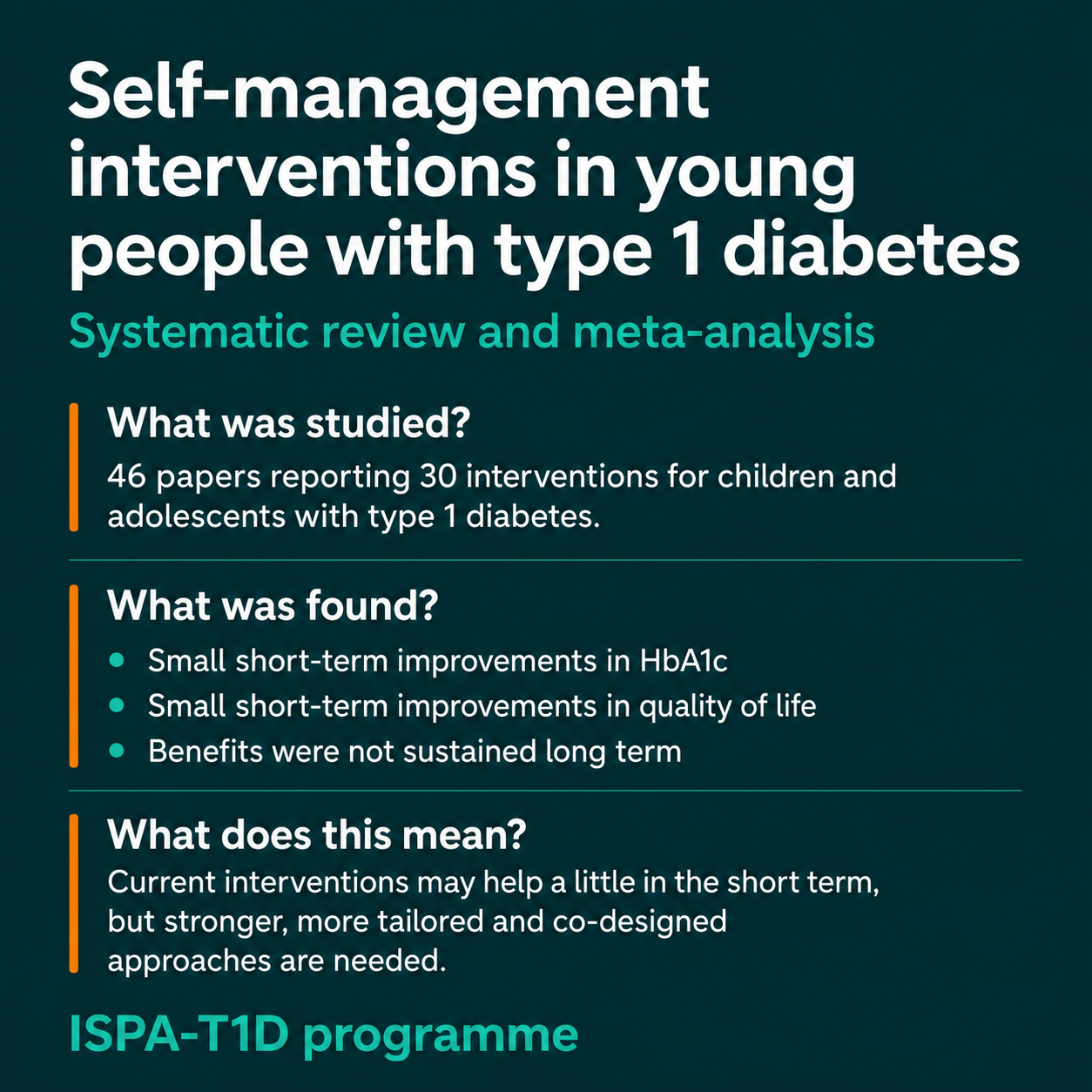
In total, 46 papers were included, reporting on 30 interventions. Outcomes of interest included HbA1c, quality of life, self-efficacy, diabetes knowledge, and self-management behaviours.
What we found
Meta-analyses showed small short-term improvements in HbA1c and general quality of life following educational and psychoeducational interventions. However, these effects were not maintained at longer-term follow-up, and the improvements were unlikely to be clinically meaningful overall.
There was no clear evidence that psychoeducational interventions were significantly more effective than education-only approaches, although psychoeducational interventions appeared to show somewhat greater short-term effects on HbA1c in pooled analyses. Evidence for self-efficacy, diabetes knowledge, and broader self-management behaviours was limited and inconsistent, and most included studies were judged to have a high risk of bias.
The review also highlighted how varied the interventions were in format, intensity, delivery, and theoretical basis. Most studies did not focus strongly on physical activity, despite its importance as part of self-management in type 1 diabetes.
Why it matters
These findings suggest that current self-management interventions for children and adolescents with type 1 diabetes may offer some short-term benefit, but there is limited robust evidence that they produce meaningful and lasting improvements. This points to the need to rethink how support is designed, delivered, and evaluated.
For the wider ISPA-T1D programme, this review highlighted the value of stakeholder co-design, the need to integrate psychological and behavioural support, and the importance of building more tailored and practical interventions that include physical activity as part of everyday diabetes management.