
Examining the Cognitive, Practical, and Emotional Demands of Managing Physical Activity in Adolescents With Type 1 Diabetes: a qualitative study with adolescents, parents, and healthcare professionals
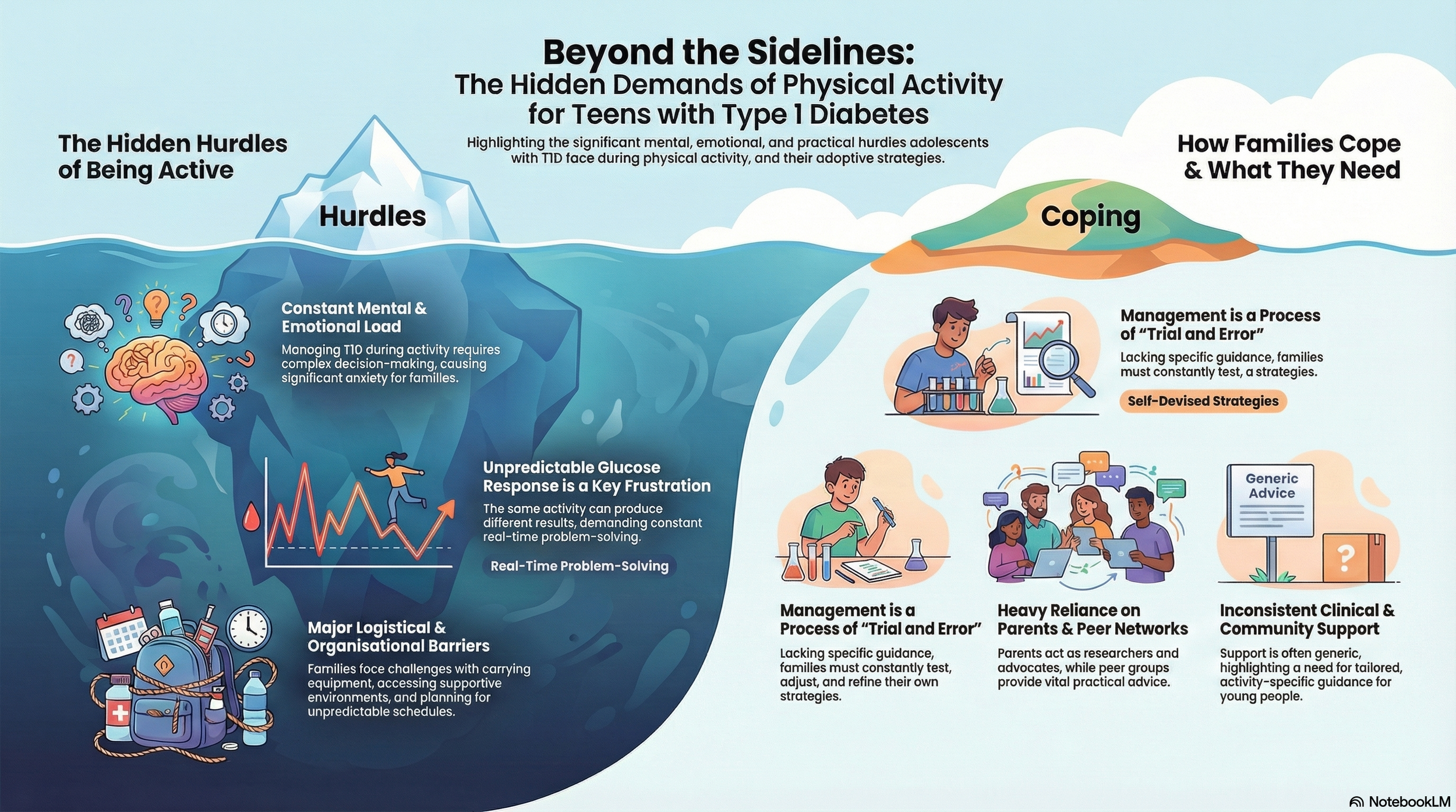
Being physically active with type 1 diabetes often involves much more than simply taking part in sport or exercise. This study explored how adolescents, parents, and healthcare professionals experience and manage the practical, emotional, and mental demands of physical activity, and what kinds of support are still missing.
Why this study was done
Physical activity has important health benefits for adolescents with type 1 diabetes, but many do not meet recommended activity levels. Existing support is often limited, not tailored to real-life situations, and does not fully reflect the everyday challenges that young people and families face when trying to be active safely and confidently.
This study was designed to better understand those lived experiences and to inform the development of more relevant, youth-friendly support within the ISPA-T1D programme.
How the study was carried out
We carried out semi-structured interviews with 37 participants: 11 adolescents with type 1 diabetes, 15 parents or carers, and 11 healthcare professionals. The interviews explored emotional, practical, and contextual factors that shape physical activity experiences, and the data were analysed using thematic analysis.
What we found
Three main themes were identified. First, participants described the large amount of mental effort involved in managing diabetes during physical activity, including parental anxiety, not wanting to feel different, unpredictability in glucose responses, and constant decision-making about insulin, snacks, and participation.
Second, participants described practical and organisational challenges, including difficulties accessing supplies during activity, uncertainty around school PE or sports sessions, variable access to technology, and the extra preparation needed simply to take part. Some young people and families also experienced exclusion or limited support from schools, clubs, or activity providers who felt unsure about managing type 1 diabetes.
Third, families often relied on adaptive strategies such as trial and error, parental support, peer learning, and advice from online diabetes communities. Clinical support varied widely, with some families receiving tailored help and others describing guidance as generic, limited, or difficult to apply in real life.
Why it matters
These findings show that supporting physical activity in adolescents with type 1 diabetes requires more than general encouragement. Young people need practical, individualised, and scenario-based support that reflects different sports, settings, and stages of independence.
For the wider ISPA-T1D programme, the study highlights the importance of co-designed resources, stronger support for parents, better training for healthcare professionals, teachers, and coaches, and more consistent guidance that is grounded in lived experience.